
Production planning and cleaning management in sensitive industries
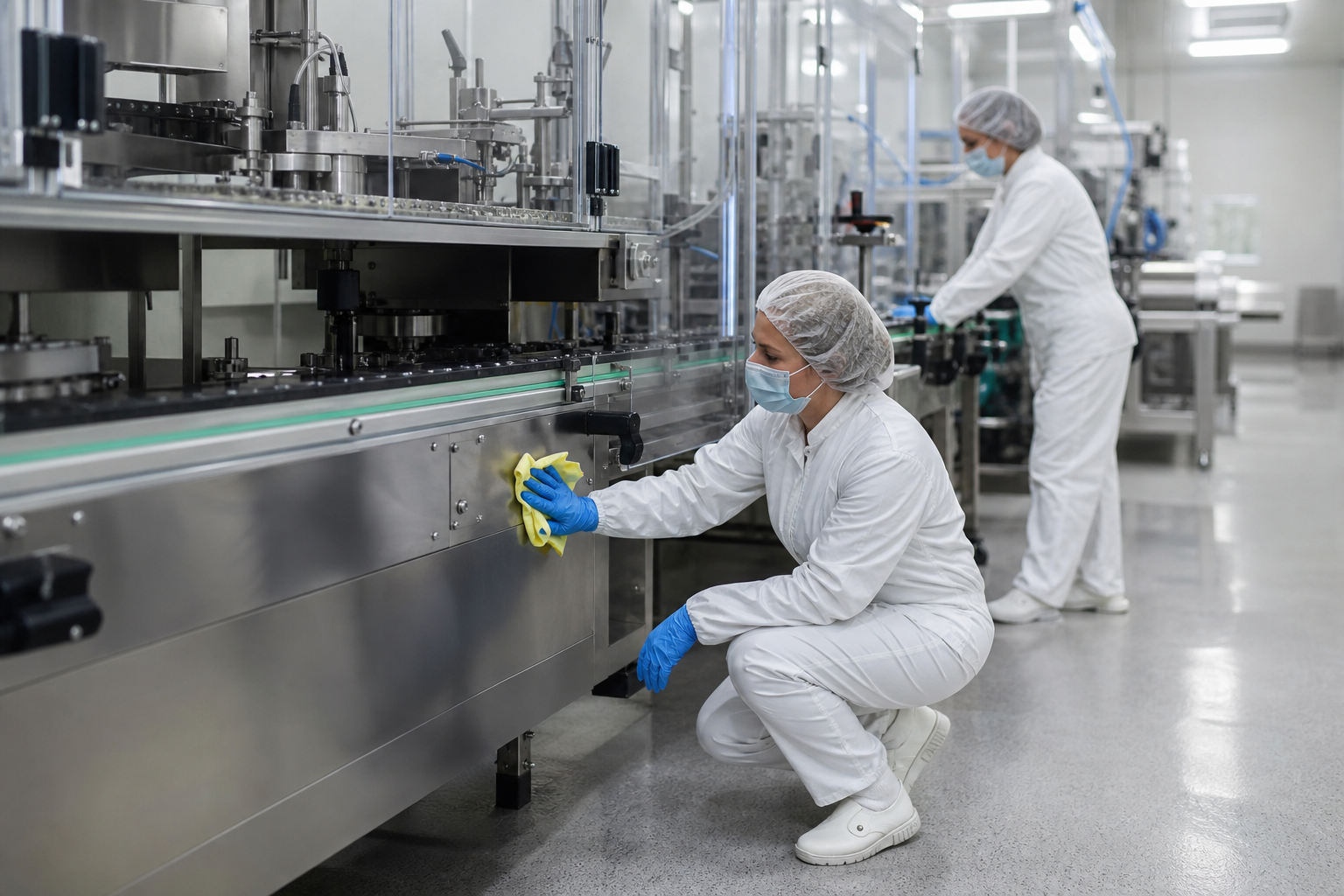
Production planning in industries where equipment cleaning is essential, such as pharmaceuticals, detergent manufacturing, food processing and textile dyeing, requires rigorous organisation and process control. Companies must balance operational efficiency, applicable hygiene requirements and finished product quality. Cleaning and setup times directly affect capacity, quality and delivery performance. This article explores the challenges, tools and methods for improving planning in these environments.
Cleaning requirements in sensitive industries
Cleaning is essential to product quality and safety and, where applicable, regulatory compliance. Pharmaceutical good manufacturing practices (GMP) and food safety procedures based on HACCP principles require appropriate, documented cleaning controls.
Cleaning may involve extended equipment downtime, partial disassembly, suitable cleaning agents, microbiological or chemical checks and full operational traceability. In pharmaceuticals, inadequate cleaning can cause cross-contamination and risks to patients; in food production, it may lead to contamination, recalls and loss of consumer confidence.
Planning must therefore include dedicated cleaning and setup periods, while managing production capacity. Accurate, anticipatory and flexible scheduling requires coordination of teams, equipment availability and priorities.
The importance of management tools such as SMED
Single-Minute Exchange of Die (SMED), a lean manufacturing method, aims to reduce changeover times by improving cleaning and setup operations.
- Analyse operations: Observe and measure each stage, distinguishing internal tasks requiring equipment stoppage from external tasks that can safely be performed while equipment is operating.
- Separate tasks: Reorganise eligible tasks externally to reduce downtime without compromising safety or validated cleaning requirements.
- Standardise: Document optimised procedures to support repeatability and training.
- Train teams: Help operators understand and adopt the new methods.
SMED can reduce capacity losses, improve responsiveness and limit changeover errors, particularly where changes are frequent and cleaning requirements are stringent. Required cleaning, safety and verification steps must never be shortened merely to achieve a changeover target.
Rigorous priority management and planning
Effective planning relies on disciplined priority management. Establish a firm short-term schedule, typically covering a few days, and review it daily to account for production disruptions, cleaning constraints and customer demand.
This discipline reduces capacity losses associated with unplanned changes and delayed cleaning. It supports delivery reliability and product quality.
Identify critical operations affecting quality and delivery and allocate appropriate priority. Regular communication between production, maintenance, quality and planning teams helps anticipate requirements and adjust schedules.
Consequences of poor planning
- Quality: Insufficient or poorly scheduled cleaning can cause cross-contamination, nonconformities and product defects.
- Delivery delays: Poorly integrated cleaning can trigger cascading delays across the supply chain.
- Capacity loss: Extended stoppages and uncontrolled changeovers reduce productivity and increase costs.
- Customer dissatisfaction: Delivery and quality failures may lead to contractual penalties, reputational damage and reduced competitiveness.
These consequences highlight the importance of integrating cleaning and setup constraints into proactive production planning.
Good practices for optimised planning
- Standardise cleaning procedures: Document stages, approved products, required times and verification checks; train teams regularly.
- Use suitable planning tools: Make constraints visible, anticipate cleaning and setup requirements and optimise schedules.
- Train teams in SMED: Develop changeover improvement skills while preserving validated controls.
- Review daily: Adjust schedules in response to unexpected events, delays and changing priorities.
- Prioritise critical operations: Give appropriate attention to activities with major quality and delivery impacts.
- Ensure traceability: Record cleaning and setup operations to support compliance and audits.
- Involve stakeholders: Coordinate production, maintenance, quality and logistics teams.
Implementation and considerations
Successful planning requires a structured and collaborative approach:
- Map cleaning processes, durations, frequencies and constraints.
- Measure downtime and identify avoidable losses.
- Apply SMED with operational teams and monitor results.
- Establish a firm schedule over a few days and review it daily.
- Train teams in cleaning practices, priority management and planning tools.
- Monitor cleaning time, conformity rates, on-time delivery and service-level indicators.
- Document operations and verify conformity with applicable requirements.
Planning should not be rigid: flexibility is essential to manage unforeseen events, production variations and sector-specific constraints.
Frequently asked questions
Why does cleaning affect production planning?
Cleaning requires equipment downtime and resources, reducing available production time. Integrating these constraints helps avoid delays and capacity losses while supporting product quality.
How can SMED optimise cleaning time?
SMED distinguishes internal and external tasks, standardises eligible operations and trains teams, reducing unnecessary downtime while maintaining required cleaning and verification.
What are the consequences of poor planning?
Potential consequences include quality deterioration, delivery delays, customer dissatisfaction, contractual penalties and reduced competitiveness.
How can priorities be managed rigorously?
Use a firm short-term schedule, daily reviews, cross-functional communication and clear identification of critical operations.
Which tools can help?
Production planning software incorporating cleaning and setup constraints, collaboration tools and performance monitoring systems can support scheduling.
ANOHA provides industrial performance support, training, auditing and technical assistance to improve production planning and cleaning management. Contact ANOHA to discuss your needs.